Kumari Puja: Its Meaning, Significance, and Vidhi
Total Views |


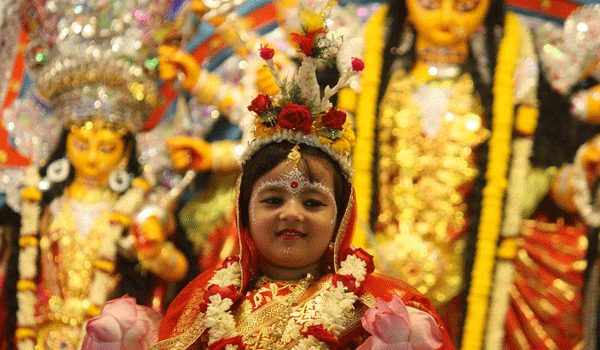
The Devi Bhagavatam explains the specific benefits of worshipping Kanyas (young maidens) representing different forms of the Shakti (the primordial feminine energy) during Kumari Puja. The text emphasizes treating these young girls with the highest reverence, as living embodiments of the divine. Young girls from 2 to 10 years of age are worshipped and respected as Devi with offerings and prasad (Naivedya).
A Kanya who has completed two years of age is called 'Kumari'; a three-year-old is 'Trimurti'; a four-year-old is 'Kalyani'; a five-year-old is 'Rohini'; a six-year-old is 'Kalika'; a seven-year-old is 'Chandika'; an eight-year-old is 'Shambhavi'; a nine-year-old is 'Durga'; and a ten-year-old Kanya is 'Subhadra'. A girl child less than two years of age should not be selected, because she is completely unaware of the taste of offerings and fragrances.
As per the Devi Bhagawat Mahapuran, worshipping the Devi in the form of a 'Kumari', a girl child who has completed two years of age, brings holistic prosperity. She acts as a shield against hardships and adversaries while blessing the devotee with a long, empowered life. The young girl 'Kumari', when worshipped, destroys sorrow and poverty; she decimates enemies and increases wealth, longevity, and strength.
Worshipping a three-year-old girl as 'Trimurti' fulfils the pursuits of Dharma, Artha, and Kama (righteousness, wealth, and desires). Her worship brings balance and success in both spiritual duties and material life, ensuring an influx of wealth and food grains, a flourishing family lineage, and the blessing of children.
A king (or a leader) who desires knowledge, victory, a stable kingdom, and happiness should daily worship the four-year-old Kanya 'Kalyani', who is the granter of all desires. 'Kalyani' signifies pure auspiciousness. Her worship is highly recommended for leaders seeking wisdom, success, and peace in their governance and personal lives. 'Kalyani', the fulfiller of all kinds of desires, constantly bestows welfare upon her devotees when worshipped continuously.
The five-year-old girl child is worshipped as ‘Rohini’. She manifests as the ultimate orchestrator of fate, ensuring that souls experience the fruits of their past actions so they may spiritually evolve. She sows the seeds of the accumulated karmas from the past lives of all living beings.
‘Kalika’, represented as a six-year-old girl child, defines the end of the kalpa (era); she absorbs the entire universe, including all animate and inanimate beings, into herself. Kalika represents the aspect of time and dissolution. She is the ultimate reality into which all of creation eventually dissolves when the universe ends. For the destruction of enemies, one should devoutly worship the maiden 'Kalika'.
One desiring wealth and prosperity should properly worship the maiden 'Chandika'. Chandika, represented by a seven-year-old girl child, has an extremely fierce nature and assumes a terrifying form to slay the demons Chanda and Munda, destroying terrible sins. Chandika is the fierce protector; her terrifying form is directed entirely toward the destruction of evil (represented by the demons) and the eradication of her devotees' profound sins.
The eight-year-old, joy-bestowing Devi ‘Shambhavi’ is the source of all supreme knowledge and wisdom. She is eternal; she is the first cause of everything, but nothing caused her.
The nine-year-old girl child ‘Durga’ is worshipped to protect her devotees from crises and to destroy obstacles and sorrows. She remains incomprehensible even to the gods. Durga literally means the one who removes insurmountable difficulties. She is the supreme protector whose true, infinite nature is beyond the intellectual grasp of even celestial beings.
The ten-year-old Kumari ‘Subhadra’ destroys the inauspicious and always bestows welfare upon her devotees when worshipped. Subhadra represents pure grace and auspiciousness. Worshipping her neutralizes bad omens and guarantees spiritual and material well-being. A person should always worship 'Subhadra' for the fulfilment of their wishes, and properly worship 'Rohini' for the cure of diseases. Subhadra grants heartfelt wishes, while Rohini is the divine healer who cures physical and mental ailments. Devi 'Kumari' playfully creates the mysterious elements of Kumara (Kartikeya).
Hence as per the Devi Bhagawat Mahapurana, a Kumari is not just a child, but a manifestation of Shakti. It is mentioned that one should devoutly worship the Goddess using the mantra 'Shrirastu' (May there be prosperity) or any Devi mantra containing the word 'Shri'.
The Devi Bhagawat Mahapuran thus directs devotees to see the divine presence of Shakti in Kumaris (Kumari; Trimurti, Kalyani, 'Rohini, Kalika, 'Chandika, 'Shambhavi, Durga and Subhadra) and honour them with offerings and mantras.
(Dr. Sheela Suryanarayanan, Associate Professor, Centre for Women's Studies, University of Hyderabad. Email: [email protected], Mob: 9000345481.)
As per the Devi Bhagawat Mahapuran, worshipping the Devi in the form of a 'Kumari', a girl child who has completed two years of age, brings holistic prosperity. She acts as a shield against hardships and adversaries while blessing the devotee with a long, empowered life. The young girl 'Kumari', when worshipped, destroys sorrow and poverty; she decimates enemies and increases wealth, longevity, and strength.
Worshipping a three-year-old girl as 'Trimurti' fulfils the pursuits of Dharma, Artha, and Kama (righteousness, wealth, and desires). Her worship brings balance and success in both spiritual duties and material life, ensuring an influx of wealth and food grains, a flourishing family lineage, and the blessing of children.
A king (or a leader) who desires knowledge, victory, a stable kingdom, and happiness should daily worship the four-year-old Kanya 'Kalyani', who is the granter of all desires. 'Kalyani' signifies pure auspiciousness. Her worship is highly recommended for leaders seeking wisdom, success, and peace in their governance and personal lives. 'Kalyani', the fulfiller of all kinds of desires, constantly bestows welfare upon her devotees when worshipped continuously.
The five-year-old girl child is worshipped as ‘Rohini’. She manifests as the ultimate orchestrator of fate, ensuring that souls experience the fruits of their past actions so they may spiritually evolve. She sows the seeds of the accumulated karmas from the past lives of all living beings.
‘Kalika’, represented as a six-year-old girl child, defines the end of the kalpa (era); she absorbs the entire universe, including all animate and inanimate beings, into herself. Kalika represents the aspect of time and dissolution. She is the ultimate reality into which all of creation eventually dissolves when the universe ends. For the destruction of enemies, one should devoutly worship the maiden 'Kalika'.
One desiring wealth and prosperity should properly worship the maiden 'Chandika'. Chandika, represented by a seven-year-old girl child, has an extremely fierce nature and assumes a terrifying form to slay the demons Chanda and Munda, destroying terrible sins. Chandika is the fierce protector; her terrifying form is directed entirely toward the destruction of evil (represented by the demons) and the eradication of her devotees' profound sins.
The eight-year-old, joy-bestowing Devi ‘Shambhavi’ is the source of all supreme knowledge and wisdom. She is eternal; she is the first cause of everything, but nothing caused her.
The nine-year-old girl child ‘Durga’ is worshipped to protect her devotees from crises and to destroy obstacles and sorrows. She remains incomprehensible even to the gods. Durga literally means the one who removes insurmountable difficulties. She is the supreme protector whose true, infinite nature is beyond the intellectual grasp of even celestial beings.
The ten-year-old Kumari ‘Subhadra’ destroys the inauspicious and always bestows welfare upon her devotees when worshipped. Subhadra represents pure grace and auspiciousness. Worshipping her neutralizes bad omens and guarantees spiritual and material well-being. A person should always worship 'Subhadra' for the fulfilment of their wishes, and properly worship 'Rohini' for the cure of diseases. Subhadra grants heartfelt wishes, while Rohini is the divine healer who cures physical and mental ailments. Devi 'Kumari' playfully creates the mysterious elements of Kumara (Kartikeya).
Hence as per the Devi Bhagawat Mahapurana, a Kumari is not just a child, but a manifestation of Shakti. It is mentioned that one should devoutly worship the Goddess using the mantra 'Shrirastu' (May there be prosperity) or any Devi mantra containing the word 'Shri'.
The Devi Bhagawat Mahapuran thus directs devotees to see the divine presence of Shakti in Kumaris (Kumari; Trimurti, Kalyani, 'Rohini, Kalika, 'Chandika, 'Shambhavi, Durga and Subhadra) and honour them with offerings and mantras.
(Dr. Sheela Suryanarayanan, Associate Professor, Centre for Women's Studies, University of Hyderabad. Email: [email protected], Mob: 9000345481.)