Movements and revolutions do not bring lasting change, awakening national consciousness does: Sarsanghchalak Dr Bhagwat


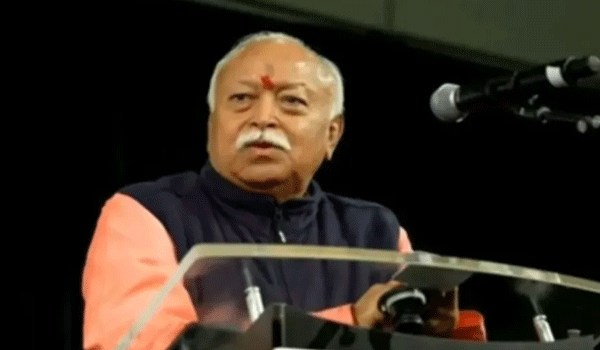
Meetings of the Karyakarini and Vibhag Toli of the South Assam and Tripura Prants were held in three sessions during the South Assam Pravas of Rashtriya Swayamsevak Sangh (RSS) Sarsanghchalak Dr Mohan Bhagwat.
Subsequently, a Bauddhik Varg (intellectual session) was organised at the auditorium of Gurucharan University, Silchar on November 17, for Karyakartas at the Khand, Nagar and higher levels. Addressing the participants, Dr Bhagwat provided guidance on various organisational matters, the responsibilities of Swayamsevaks and their role in society.
Emphasis on the core Ideals and organisational methodologyDuring the three-sessions, Sarsanghchalak Dr. Mohan Bhagwat elaborated on the core foundations of the Sangh—its ideology, methodology and conduct. He emphasised the need to impart training to Karyakartas at all levels so that Sangh activities are carried out with greater vigilance, dedication and responsibility, even under favourable circumstances.
He observed that lasting changes in society have not been achieved merely through movements or revolutions in world history. Rather, genuine transformation has been made possible by awakening national consciousness and a sense of social responsibility among people from all sections of society.
Dr. Bhagwat also emphasised the concept of Panch Parivartan, aimed at bringing positive transformation in society.
First and foremost, Fulfilment of civic duties. Secondly, the Swadeshi outlook and use of indigenous products. Then, Preservation of the Indian family system and family values. And the fourth step being, Environmental conservation and lastly Establishment of social harmony.
He called for collective efforts involving Swayamsevaks as well as people from different sections of society to advance initiatives based on these five principles.
Call to strengthen daily shakhasAddressing the Bauddhik Varg, Dr Mohan Bhagwat stressed the need to make the daily Shakha, one of the principal foundations of the Sangh’s organisational activities, more organised, disciplined and effective.
He stated that there is no separate identity between the Sangh and its Swayamsevaks, as the Swayamsevaks themselves represent the true identity of the organisation. Every Swayamsevak must remain active and discharge his responsibilities and duties with dedication.
He further emphasised that the Sangh’s work is not confined to organisational activities alone. Its ideals and working principles are reflected through responsible engagement across all sections of society. Therefore, everyone must contribute effectively to social welfare with dedication, discipline, active participation and a sense of responsibility.
In this regard, he highlighted four important responsibilities of Swayamsevaks—Tapasya, working in accordance with the Sangh’s guidance, acquiring and practising Sanskars, and establishing contact with new people to nurture them as Swayamsevaks. He also stated that the Sangh functions on the basis of a specific ideology and set of ideals.
Nationwide organisational expansionAlongside the successful completion of various programmes across the country during the centenary year, the Sangh has also witnessed significant organisational expansion.
According to the figures presented, the Sangh is currently conducting 99,423 daily Shakhas at 63,208 locations across the country. During the current year, the number of daily Shakhas has increased by 12,025, while the number of Shakha locations has grown by 8,156. Additionally, 34,982 weekly Milan programmes are being conducted at 26,826 locations, while 14,096 monthly Sangh Mandalis are being organised at 13,363 locations.
As part of the RSS centenary celebrations, a total of 65,664 Hindu Sammelans have been organised across rural and urban areas of the country. More than 4 crore 93 lakh 76 thousand people, including men and women, participated in these gatherings.