Fact Check: Six fake allegations against CEC Gyanesh Kumar debunked


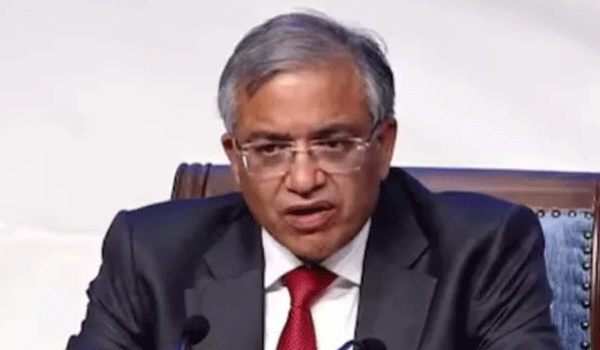
The Election Commission has rejected several of these charges in its submissions before the Supreme Court. It has explained the procedures followed during SIR and clarified the roles of election officials, the ECINET platform and all three Election Commissioners.
A closer look at the allegations alongside the Commission’s explanations brings out important gaps between what has been claimed and what the official record actually shows.
Claim of Election Manipulation: SIR Involved Extensive Administrative and Political Oversight
One of the most serious allegations against CEC Gyanesh Kumar is that the SIR exercise was used to manipulate electoral rolls and steal votes. Critics have questioned the timing, procedures and scale of the revision, suggesting that the exercise could influence election outcomes.
However, the Election Commission’s account highlights the extensive administrative structure involved in the process. According to the figures cited by the ECI, more than 20 lakh Booth Level Agents (BLAs) nominated by political parties participated in the exercise, alongside over 10 lakh Booth Level Officers (BLOs), more than 4,000 Electoral Registration Officers (EROs) and over 20,000 Assistant Electoral Registration Officers (AEROs).
The exercise also involved District Election Officers (DEOs) and Chief Electoral Officers (CEOs), creating multiple layers of administrative supervision.
The participation of political-party-appointed BLAs is particularly relevant because they provide an additional mechanism through which parties can participate in electoral-roll verification and flag discrepancies.
The Commission has maintained that the revision was conducted through established procedures and that political parties were involved in the verification process.
CHARGES AGAINST CEC GYANESH KUMAR:
CLAIMS vs FACTS1) ALLEGATION: ELECTIONS WERE MANIPULATED TO STEAL VOTES
FACT 👉 The SIR exercise involved extensive participation and oversight, including more than 20 lakh Booth Level Agents (BLAs) nominated by political parties, over 10…
— Rishi Bagree (@rishibagree) October 31, 2026
The 13 Crore Voter Deletion Claim: What the Figure Actually Represents
Another major allegation concerns the claim that approximately 13 crore voters were removed from electoral rolls during the SIR exercise. The figure has featured prominently in political criticism of the Election Commission, with opponents arguing that such a large-scale deletion could deprive eligible citizens of their voting rights.
However, the approximately 13 crore figure refers to entries identified under different categories during the draft-roll exercise. It does not automatically represent the number of voters whose names were permanently deleted from the final electoral rolls.
The categories included approximately 6.3 crore voters who had shifted from their registered addresses, around 3 crore who were absent or untraceable, approximately 2.8 crore deceased voters and nearly 1 crore entries identified as duplicate or multiple registrations.
These categories were identified for verification during the revision process. Their inclusion in the draft-stage figures does not mean that every entry was automatically and permanently removed.
The distinction between identifying an entry for verification and deleting a name from the final electoral roll is central to understanding the controversy. The SIR process provides for claims and objections, allowing eligible voters to seek corrections or inclusion in the electoral rolls.
The Commission has maintained that the exercise is intended to improve the accuracy of electoral rolls by identifying deceased voters, duplicate entries and people who have shifted their residences.
Therefore, describing all approximately 13 crore flagged entries as permanently deleted voters presents an incomplete picture of the revision process.
A third allegation concerns the use of an additional declaration alongside Form 6, the statutory application used by citizens seeking inclusion in electoral rolls. Critics have questioned whether the Election Commission could introduce an additional requirement without parliamentary approval.
The ECI has maintained that the statutory Form 6 remained unchanged and that the additional declaration was prescribed separately for the SIR exercise. According to the Commission, the declaration was intended to facilitate the verification process and was not an amendment to the existing statutory form.
The distinction is important because Form 6 is prescribed under the Registration of Electors Rules, 1960. Any formal amendment to the prescribed form would have to follow the applicable statutory procedure.
However, the judicial position requires careful clarification. Although the Election Commission has referred to the Supreme Court’s earlier proceedings in support of its position, the Court clarified that it had neither approved nor rejected the validity of the disputed additional declaration. The Court observed that the particular version under challenge was not before it when the earlier judgment was delivered.
The ECI also acknowledged that displaying the additional declaration alongside Form 6 on its online platform could create confusion about whether the statutory form itself had been modified. It subsequently stated that the two components had been separated in the online process.
ECINET Allegations: ECI Says Electoral Registration Officers Retain Legal Authority
Questions have also been raised over ECINET, the Election Commission’s digital platform, with allegations that it was used to exercise centralised control over electoral rolls and voter inclusion or deletion.
In its affidavit before the Supreme Court, the ECI clarified that ECINET functions as a digital platform supporting election-related administrative processes. It maintained that the platform does not independently possess the statutory authority to decide whether a voter’s name should be included in or removed from an electoral roll.
That authority continues to rest with the Electoral Registration Officer, who is responsible for taking decisions under the applicable electoral laws.
The Commission’s explanation distinguishes between the technological infrastructure used to manage electoral data and the statutory authority responsible for making decisions about voter registration.
The ECI has maintained that ECINET merely facilitates the work of authorised officials and does not replace the legally prescribed decision-making process.
This clarification is significant because the use of a centralised digital platform does not, by itself, transfer statutory powers from the designated electoral authorities to the software system.
Were the Other Two Election Commissioners Excluded From Decision-Making?
Another charge against CEC Gyanesh Kumar concerns the alleged exclusion of the other two Election Commissioners from important decisions relating to SIR.
The Election Commission has rejected the allegation, informing the Supreme Court that all three Election Commissioners unanimously approved the major decisions concerning the revision exercise.
According to the Commission’s submission, questions, observations and discussions recorded during the movement of official files are part of normal institutional deliberations. Such exchanges should not automatically be interpreted as evidence of disagreement over the final decisions.
The ECI has maintained that the formal decisions were taken collectively and that the other two Election Commissioners were not excluded from the decision-making process.
The distinction between internal deliberations and final institutional decisions is important. Officials may raise questions, seek clarifications or suggest changes while examining a proposal.
Allegations of Political Influence From PM Modi and Amit Shah
The sixth allegation suggests that decisions concerning electoral-roll revisions were influenced by the political leadership of Prime Minister Narendra Modi and Union Home Minister Amit Shah.
The Election Commission has maintained that its decisions were institutional and were approved unanimously by all three Election Commissioners. The allegation of direct political interference, therefore, requires documentary or other verifiable evidence establishing such intervention.
The outcomes of the 2026 Assembly elections in Kerala and Tamil Nadu also provide an important political context to the debate.
In Kerala, the Congress emerged victorious, while in Tamil Nadu, actor-turned-politician Vijay’s Tamilaga Vettri Kazhagam (TVK) emerged as the leading party. These outcomes demonstrate that parties opposed to the BJP-led government have also secured significant electoral victories.
The broader historical context also shows that intensive revisions of electoral rolls are not a new practice introduced under the present government. Such exercises have been conducted during different periods since Independence, including under Congress-led governments.
Electoral Transparency and Accountability Remain Central
The allegations against CEC Gyanesh Kumar raise important questions about the functioning of India’s electoral institutions. However, the claims must be examined individually rather than treated as established facts merely because they have been raised by political parties.
The Election Commission’s submissions before the Supreme Court provide explanations regarding the administrative structure of SIR, the classification of voters during the draft-roll exercise, the use of Form 6, the functioning of ECINET and the participation of all three Election Commissioners in formal decisions.
At the same time, the right to vote requires the Commission to ensure that no eligible citizen is wrongly excluded. Every revision exercise must remain transparent, accessible and open to scrutiny.
Political parties have the right to question the Election Commission and seek accountability. Equally, allegations of vote theft, deliberate manipulation and political interference must be supported by verifiable evidence.